What Luxury Watch Buyers Look for Before an Offer
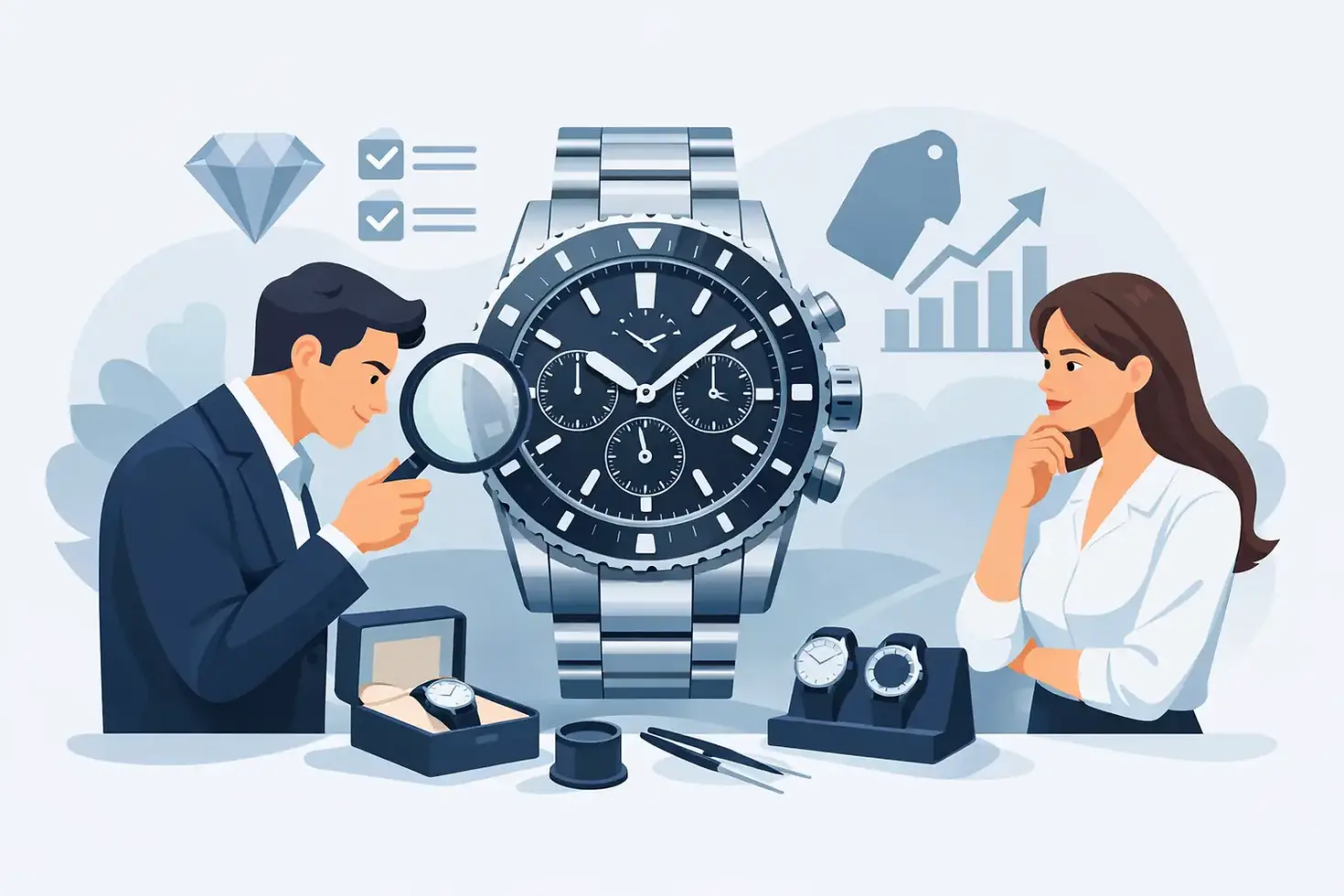
A luxury watch can be worth far more than its weight in metal, but its value is rarely determined by one detail alone. Luxury watch buyers look at the complete picture: the maker, reference number, condition, originality, service history, and current market demand. Whether you are selling a watch you no longer wear, handling an inherited collection, or simply want immediate cash, knowing what a buyer sees can help you approach the sale with confidence.
What Luxury Watch Buyers Evaluate
The brand is usually the first factor. Well-known Swiss makers and established luxury names tend to have the strongest resale market because there is consistent demand for their watches. A recognizable name, however, is only the starting point. Two watches from the same brand may receive very different offers depending on the specific model, production year, materials, and condition.
Buyers identify a watch by its reference number, serial number, case markings, dial details, movement, and bracelet or strap. These details help establish exactly what the watch is, whether its parts are appropriate for that model, and how it compares with recent secondary-market sales. A stainless-steel sports watch, a solid-gold dress watch, a diamond-set model, and a limited-production piece may each appeal to different buyers.
Condition matters, but it does not always mean a watch must look brand new. Light wear from normal use is common. Deep scratches, dents, moisture damage, a cracked crystal, missing links, or a watch that does not run can affect the offer. Even so, a damaged or non-working luxury watch may still have substantial value. Its movement, case, bracelet, gold content, and original parts can all matter.
Original Parts Can Make a Real Difference
Originality is one of the most overlooked parts of selling a luxury timepiece. The original dial, hands, bezel, crown, bracelet, and movement can influence collector interest and resale value. A watch that has been altered with aftermarket diamonds, a replacement dial, or a non-original bracelet may still be valuable, but the market for it may be narrower.
This is especially true for vintage watches. Patina on an original dial or hands can be desirable to some collectors, while an overly restored watch may bring less interest. On the other hand, a newer watch with obvious wear may benefit from professional servicing or cleaning. There is no one answer for every piece.
Before paying for repairs, ask whether the work is likely to add more value than it costs. A major repair bill does not automatically lead to a higher offer. In some cases, it is better to let the buyer evaluate the watch as it is and account for needed service in the offer.
The Box and Papers Question
Original boxes, warranty cards, receipts, manuals, extra links, and service records can help support a watch’s history. They may increase buyer confidence and can improve value, particularly for newer or highly collectible models. A complete set is generally more attractive than a watch alone.
Still, do not assume a watch without papers has no value. Many legitimate pre-owned watches have been separated from their box and documents over the years, especially inherited pieces. A qualified buyer can inspect the watch itself and explain how the missing items affect the offer.
If you have documents, bring them. If you do not, bring the watch anyway. The same applies to extra bracelet links, spare straps, and original clasps. Keeping every related item together makes the evaluation easier and may prevent a valuable accessory from being misplaced.
Why Market Demand Changes the Offer
Luxury-watch values move with demand. A model that was easy to find a few years ago may become hard to source, while a once-popular style may cool off when buyer preferences shift. Material also plays a role. Gold watches have both luxury resale appeal and underlying precious-metal value, while steel models may command strong prices when collector demand is high.
Size, color, dial configuration, and production run can also affect interest. A rare variation may be worth more than a common version, but rarity alone is not enough. There must be active demand for it. That is why online asking prices should be treated carefully. An unsold listing is not proof of a watch’s actual cash value.
A direct buyer makes an offer based on what the watch can realistically sell for after authentication, servicing, insurance, overhead, and market risk. That number may differ from a retail price you see advertised. Retail sellers often have time to wait for the right customer. A person selling for immediate payment is receiving the convenience and certainty of a completed local transaction.
Preparing Your Watch for an In-Person Evaluation
You do not need to become a watch expert before selling, but a little preparation helps. Start by gathering the watch, its box and papers, spare links, service receipts, and any accessories you can find. If the watch was inherited, write down any family information you know, such as when it was purchased or last serviced. It may not determine the value, but it can provide useful context.
Avoid trying to polish the watch yourself. Home polishing can soften sharp case edges, leave uneven marks, or damage a finish. Do not force a crown that feels stuck, pry open the case back, or use harsh cleaners. Bring the watch in its current condition, ideally in a soft pouch or protective case.
If you know the brand and model, it is helpful to share that information. If you do not, that is fine. A professional evaluation should include a close inspection rather than relying solely on what is printed on the dial. Counterfeit watches, altered pieces, and watches assembled from mixed parts exist in the secondary market, so verification protects both seller and buyer.
Questions Worth Asking a Watch Buyer
A good transaction should feel clear, not rushed or mysterious. Ask how the watch is being identified and which factors are affecting the offer. If the piece has cosmetic damage, missing paperwork, aftermarket parts, or a mechanical issue, ask how that changes the valuation.
You can also ask whether the buyer is valuing the watch as a complete timepiece, for its precious-metal content, or both. This is particularly relevant for older gold watches and damaged pieces. A watch may have a stronger value as a functioning luxury item than as scrap metal, so an experienced buyer should consider the appropriate resale path.
It is reasonable to compare offers, especially for a high-value watch. When comparing, make sure each buyer has evaluated the same items, including the bracelet, links, box, papers, and accessories. The highest number is not always the best choice if the process feels unclear or payment is delayed. Many sellers value a straightforward in-person offer, immediate payment, and the ability to ask questions face to face.
Selling an Inherited or Unused Watch
An inherited watch can carry emotional weight along with financial value. You do not need to decide immediately whether to sell it. Take time to look through paperwork, identify any related accessories, and consider whether anyone in the family wants to keep it. Once you decide to sell, an in-person evaluation gives you a practical starting point without requiring you to ship a valuable item or negotiate with strangers.
The same is true for a watch that has been sitting in a drawer for years. A dead battery, worn strap, or outdated style does not mean it is worthless. In some cases, the watch’s age, original configuration, or metal content may be precisely what gives it value.
For sellers in Westchester and the New York metro area, Downtown Gold City offers a local way to have luxury watches evaluated alongside gold, diamonds, coins, and other valuables. Bring what you have, ask direct questions, and make a decision only after you understand the offer. A watch that no longer fits your life may be ready to become cash for what comes next.


Comments