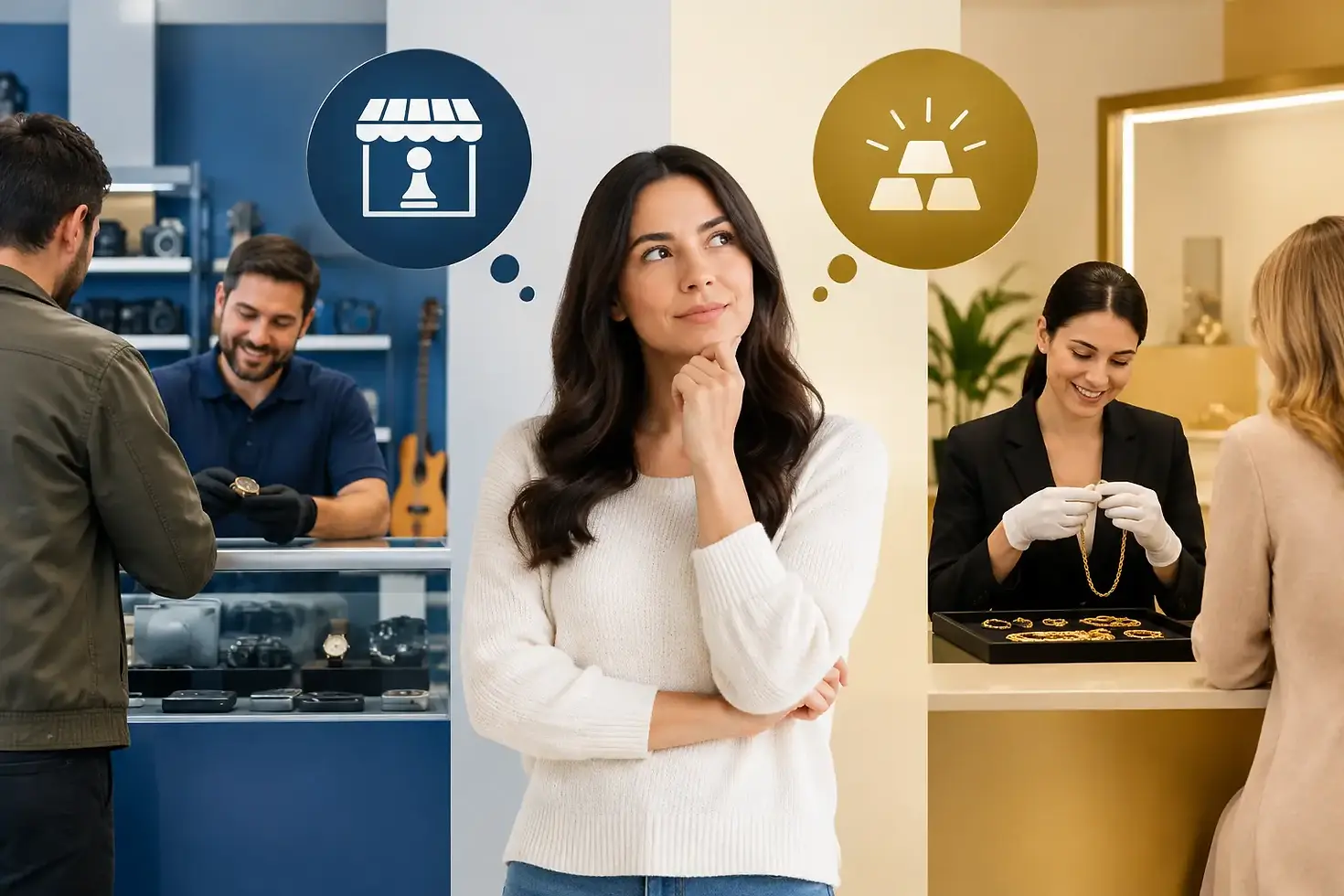
Pawnshop Versus Gold Buyer: Which Pays More?
That gold bracelet sitting in a drawer may be worth real money, but where you take it can change the type of transaction you receive. In a pawnshop versus gold buyer decision, the best choice usually comes down to one question: Do you want a short-term loan with a chance to reclaim the item, or do you want to sell it outright for immediate cash?
Both options can be legitimate. They simply serve different needs. Knowing how each works before you walk in helps you ask better questions, compare offers fairly, and avoid making a rushed decision about jewelry, coins, watches, diamonds, or precious metals.
Pawnshop Versus Gold Buyer: The Main Difference
A pawnshop is built to make collateral loans. You bring in an item of value, the pawnbroker offers a loan based on what they believe they could recover if you do not repay it, and your item is held as security. If you repay the loan plus applicable interest and fees by the due date, you get the item back. If you do not, the pawnshop may sell it.
Many pawnshops also purchase items outright, but lending is still central to their business model. Their evaluation often considers whether an item can be displayed, stored, and resold to a broad retail audience. That can work well for merchandise with an active secondhand market, such as tools, electronics, instruments, collectibles, and certain jewelry.
A dedicated gold buyer generally focuses on purchasing valuables directly from the public. The transaction is a sale, not a loan. Once you accept an offer and complete the sale, you receive payment and the buyer takes ownership of the item.
For gold jewelry, silver, coins, diamonds, and luxury watches, a specialized buyer may have a more direct path to refining, wholesale distribution, collector channels, or secondary luxury markets. That focus can matter when the value lies in metal content, gemstones, brand, condition, or collector demand rather than simple shelf appeal.
When a Pawnshop May Make Sense
A pawn loan can make sense if your item has personal meaning and you expect to repay the loan within the stated period. Perhaps you need cash for an unexpected car repair but want to keep a family heirloom, a musical instrument, or a watch you wear regularly. A collateral loan lets you use the item without selling it permanently.
Before choosing this route, be realistic about repayment. Ask for the full loan terms in writing, including the due date, interest, fees, extension options, and what happens if the loan is not repaid. A small loan can become more expensive than expected when it is extended repeatedly.
A pawnshop can also be convenient when you want to sell a variety of household items at once. If you have electronics, tools, sporting goods, and a few pieces of jewelry, one stop may be practical. Convenience is valuable, particularly when you are clearing a home or handling a move.
Still, convenience and the highest possible offer are not always the same thing. A shop that needs to assess many unrelated categories may not place the same emphasis on the details that affect a diamond, gold chain, rare coin, or fine watch.
When a Gold Buyer May Be the Better Fit
If you are ready to sell unwanted valuables rather than borrow against them, a gold buyer is often the more direct option. This is especially true for broken chains, single earrings, outdated rings, dental gold, inherited jewelry you will not wear, silver pieces, and gold items with no meaningful resale value as jewelry.
Gold buyers typically evaluate the factors that drive a precious-metal purchase: the item’s weight, karat or purity, current market conditions, and any additional value from diamonds, designer names, craftsmanship, or resale potential. A good buyer should explain the evaluation in plain language, even if you have never sold jewelry before.
Diamonds and watches require a closer look. A diamond’s value is not determined by carat weight alone. Its cut, color, clarity, shape, certification, setting, and current resale demand can affect the offer. For luxury watches, the brand, model, condition, originality, service history, box, papers, and market demand may all matter.
A specialized local buyer can be particularly helpful when you have several categories to sell. Downtown Gold City Gold & Diamond Buyers purchases gold, silver, diamonds, watches, and coins, allowing a seller to have different valuables reviewed in one in-person visit rather than trying to find a separate outlet for each item.
Why Offers Can Differ So Much
It is normal for offers to vary. A gold buyer and a pawnshop may be looking at the same ring through different business models, overhead costs, resale channels, and risk calculations. That does not automatically mean one offer is unfair.
For gold, the most basic value starts with purity and weight. A 10K item contains less pure gold than a 14K or 18K item, so equal weights do not have equal value. Stones, clasps, solder, and non-gold parts can also affect the payable gold weight.
For jewelry, sentimental value and original purchase price usually do not translate directly to resale value. A ring that cost thousands of dollars at retail may be evaluated primarily for its gold and diamond value if it is not a sought-after brand or design. This can feel surprising, but retail pricing includes manufacturing, design, store overhead, marketing, and warranty costs that are not part of a secondhand purchase.
Coins are another category where assumptions can be costly. Some coins are valued mainly for their precious-metal content, while others carry collector value because of date, mint mark, rarity, condition, or demand. Do not clean coins before having them evaluated. Cleaning can reduce collector appeal.
How to Compare a Pawnshop and Gold Buyer Fairly
Start by deciding whether you are seeking a loan or a permanent sale. Comparing a pawn loan to a cash purchase is not an apples-to-apples comparison. If keeping the item is your priority, compare loan terms. If selling is your priority, compare purchase offers and the clarity of the evaluation.
Bring the same items to each buyer and ask what is driving the offer. For gold jewelry, ask whether the item was tested for karat and weighed. For diamonds, ask whether the offer accounts for the stone separately from the setting. For a watch, ask whether the brand and model affect the value beyond the metal content.
You do not need to become an expert overnight. You do need enough information to understand what you are being offered. A trustworthy buyer should not pressure you to sell immediately or make you feel foolish for asking questions. Take the written offer, if one is available, and consider a second opinion for high-value items.
Bring any documentation that could help establish value, including diamond certificates, watch boxes and papers, receipts, appraisals, coin records, or service paperwork. These materials do not guarantee a specific price, but they can help identify the item accurately and support a stronger evaluation.
Choose the Option That Matches Your Goal
Choose a pawnshop when a short-term loan is the real need and you have a workable plan to repay it. Choose a gold buyer when you want to convert unwanted or inherited valuables into cash without taking on a loan or worrying about repayment dates.
For sellers in New Rochelle and throughout Westchester, an in-person evaluation offers something online estimates cannot: the chance to see your items reviewed, ask questions face-to-face, and decide only when the offer feels right. Whether the item is a broken gold chain, an estate ring, a coin collection, or a luxury watch, the right transaction is the one that gives you clarity, fair treatment, and confidence in your next step.


Comments